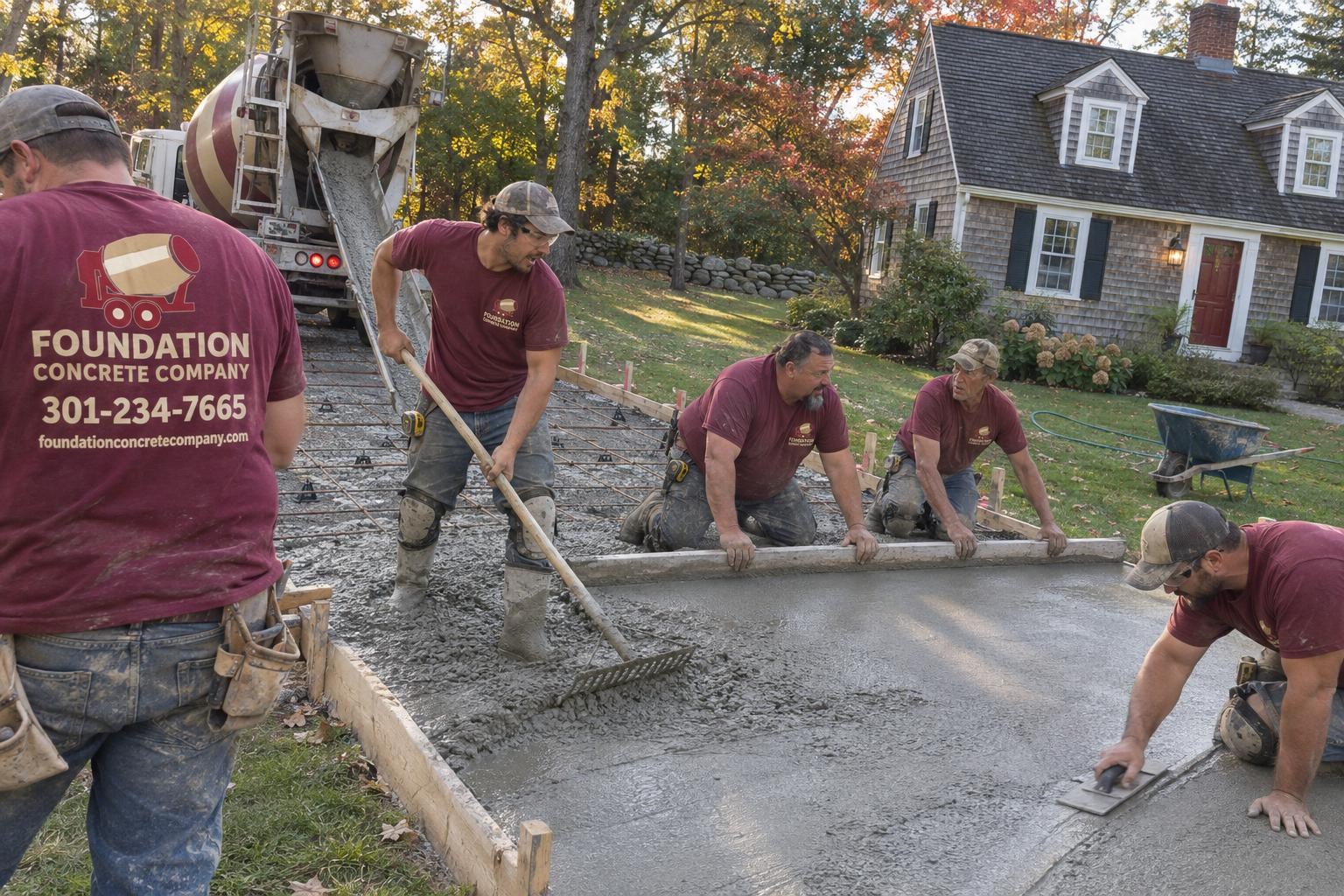
We pour and repair concrete for homes and small properties, mostly driveways, patios, and walkways. Most of us came up through this trade on job sites, not classrooms, learning how concrete actually sets instead of how it's supposed to on paper.
Usually someone calls us after a driveway's cracked wall to wall or a patio's gone lopsided where water collects underneath it. We dig out the bad subgrade, compact a real base, and set control joints where the slab will actually want to crack, not just where it's convenient to cut. That's what decides whether the new concrete is still flat and solid five winters from now.
None of this is complicated. It is mostly just doing what we said we would do.
We carry the coverage this trade requires, and we'll show you proof before you sign anything. A slab failure years later shouldn't be your problem to chase down.
We measure the area, check the access for the truck, and price it before we pour, not after. No surprise line items once the concrete's already down.
We don't hand your driveway off to a sub you've never met. The people on your property are the ones we trained on forms and finish.
Concrete washout left in a yard kills grass and stains pavers, so we don't leave it. You get your driveway back, not a mess to deal with after.
Clay-heavy soil here moves more than sandy soil further south, and that changes how deep we dig and how we compact base. That's not something you learn from a manual, it's from pouring in this county.
We've seen what happens when a slab's poured too thin or finished too early in the heat. That experience is why we slow down on the steps that actually matter.
Finishes, textures, and repairs we've handled, in our own words and our own photos.
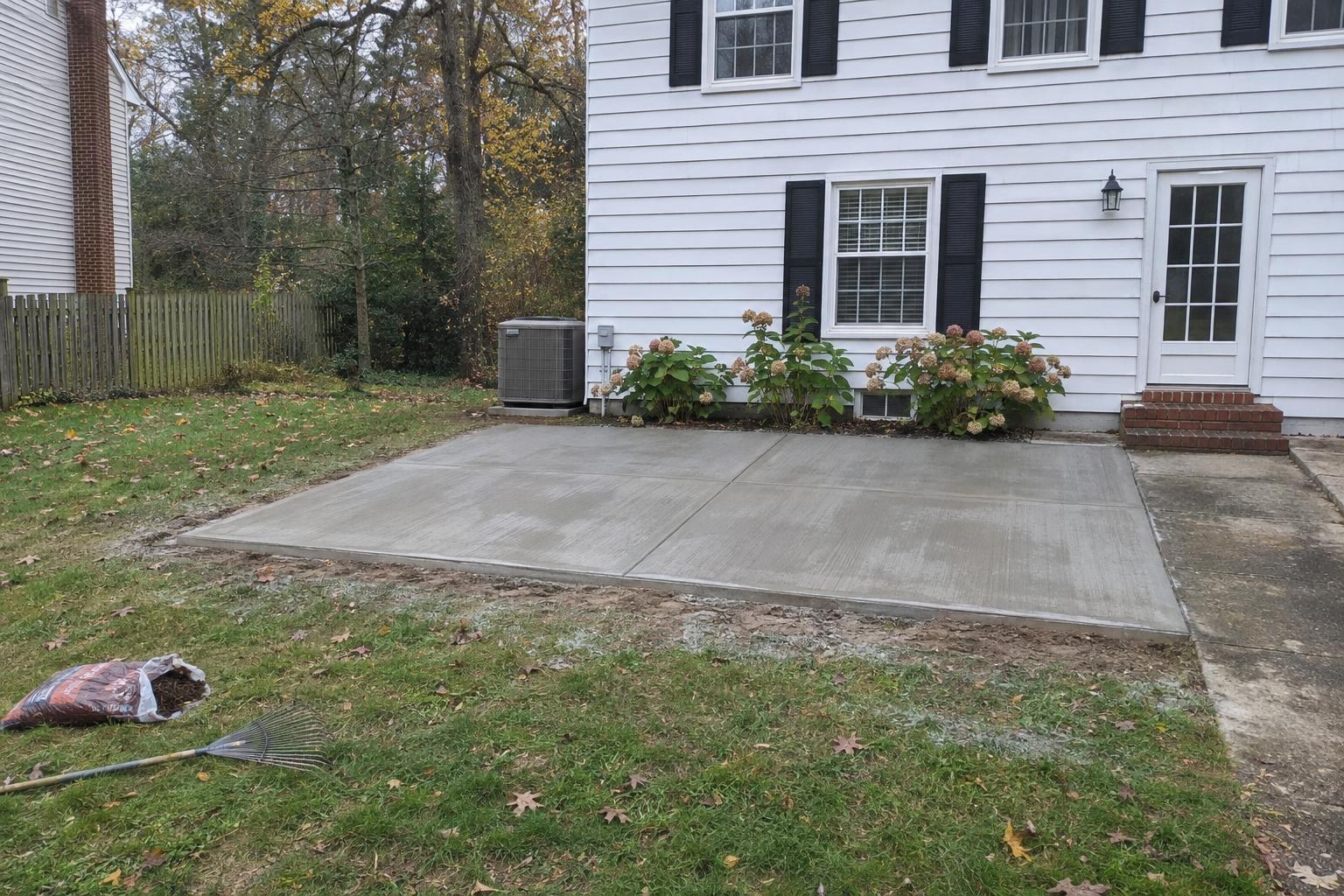
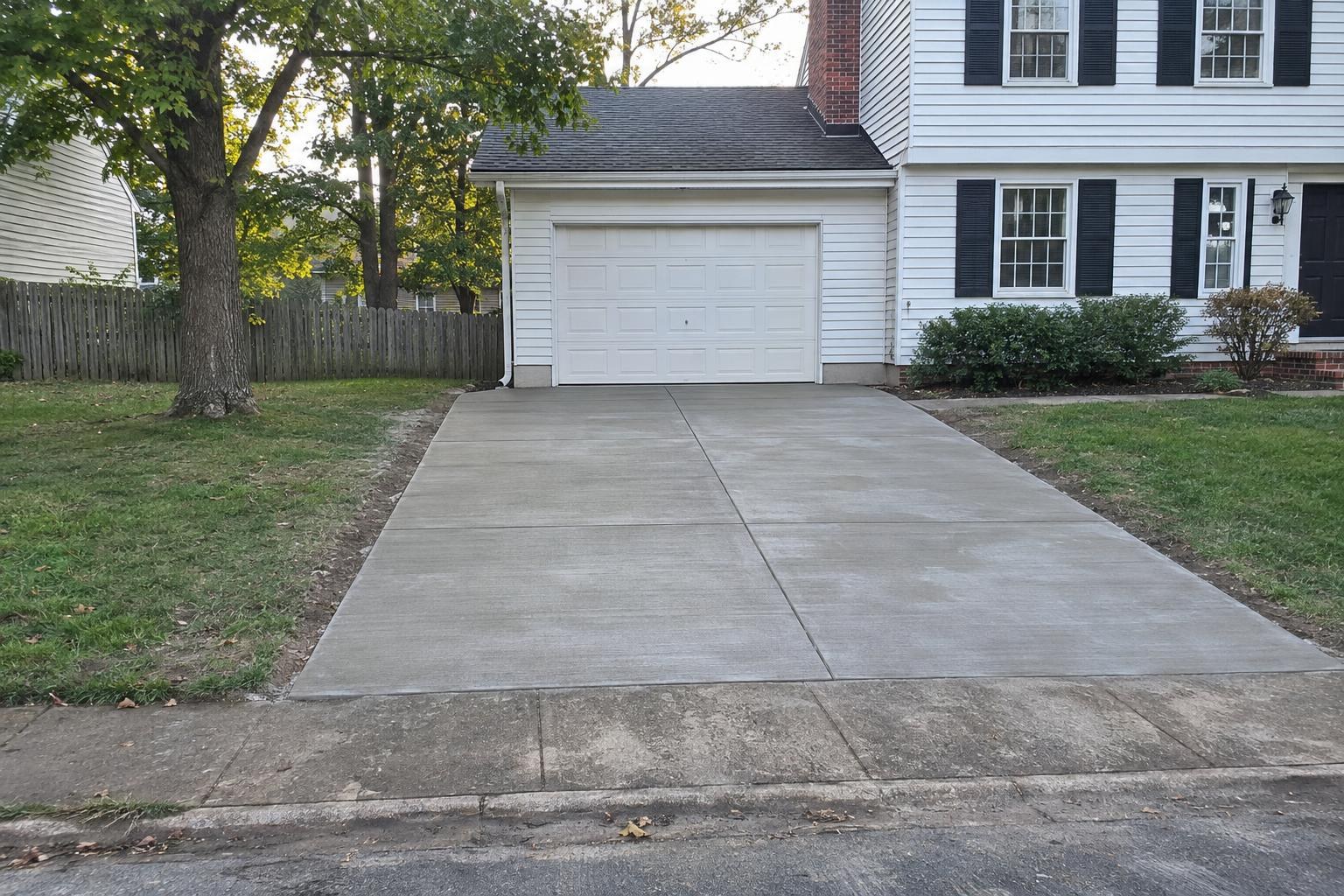
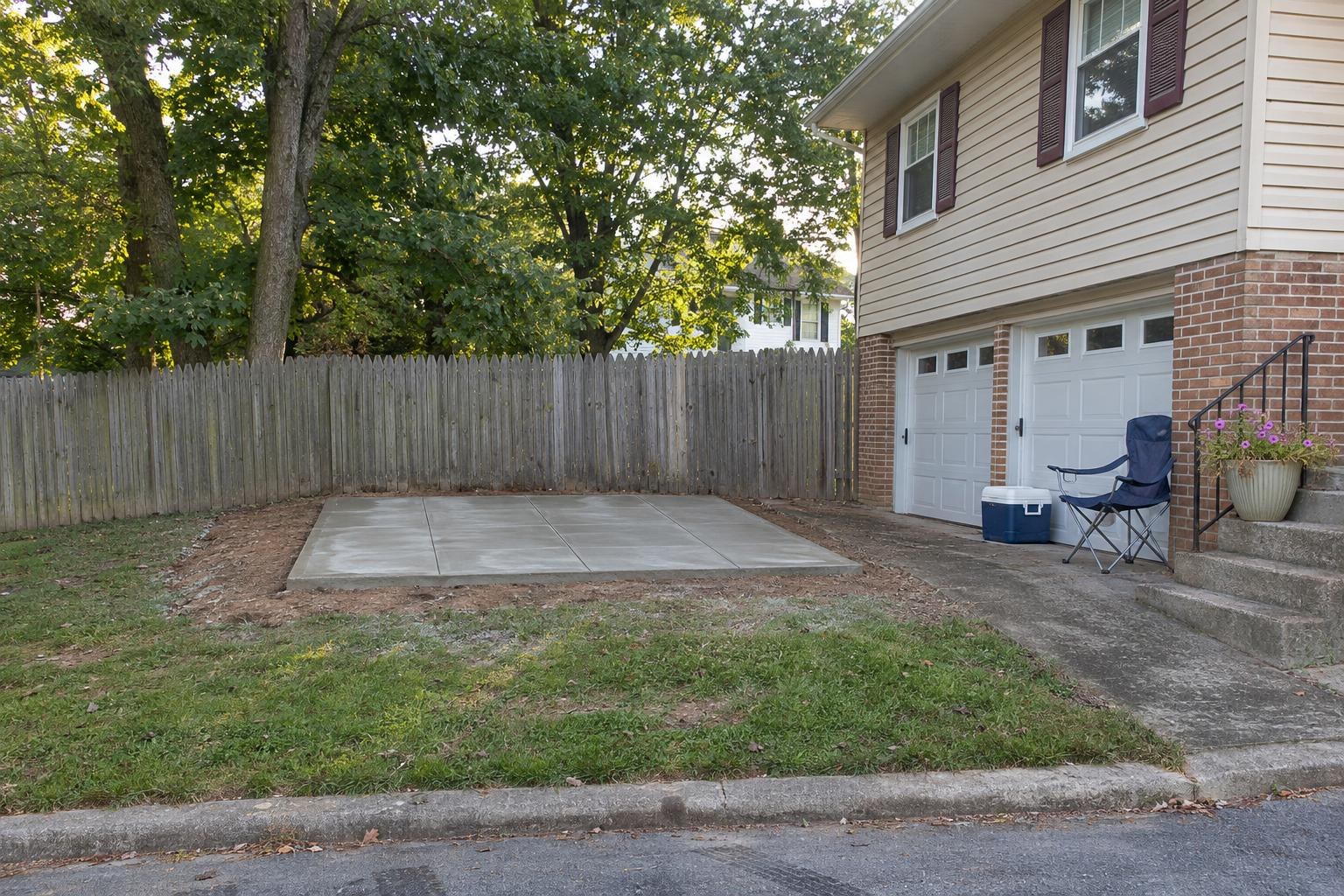
What homeowners want to know about us before they let us on their property.
Free estimate, a price in writing, and work we stand behind.