What We Do

Services

A full rundown of what we pour, patch, and finish, from driveways down to a single cracked step.

Home › Services

Everything we take on

Every job below is one we do ourselves across Gaithersburg.

Concrete Driveways

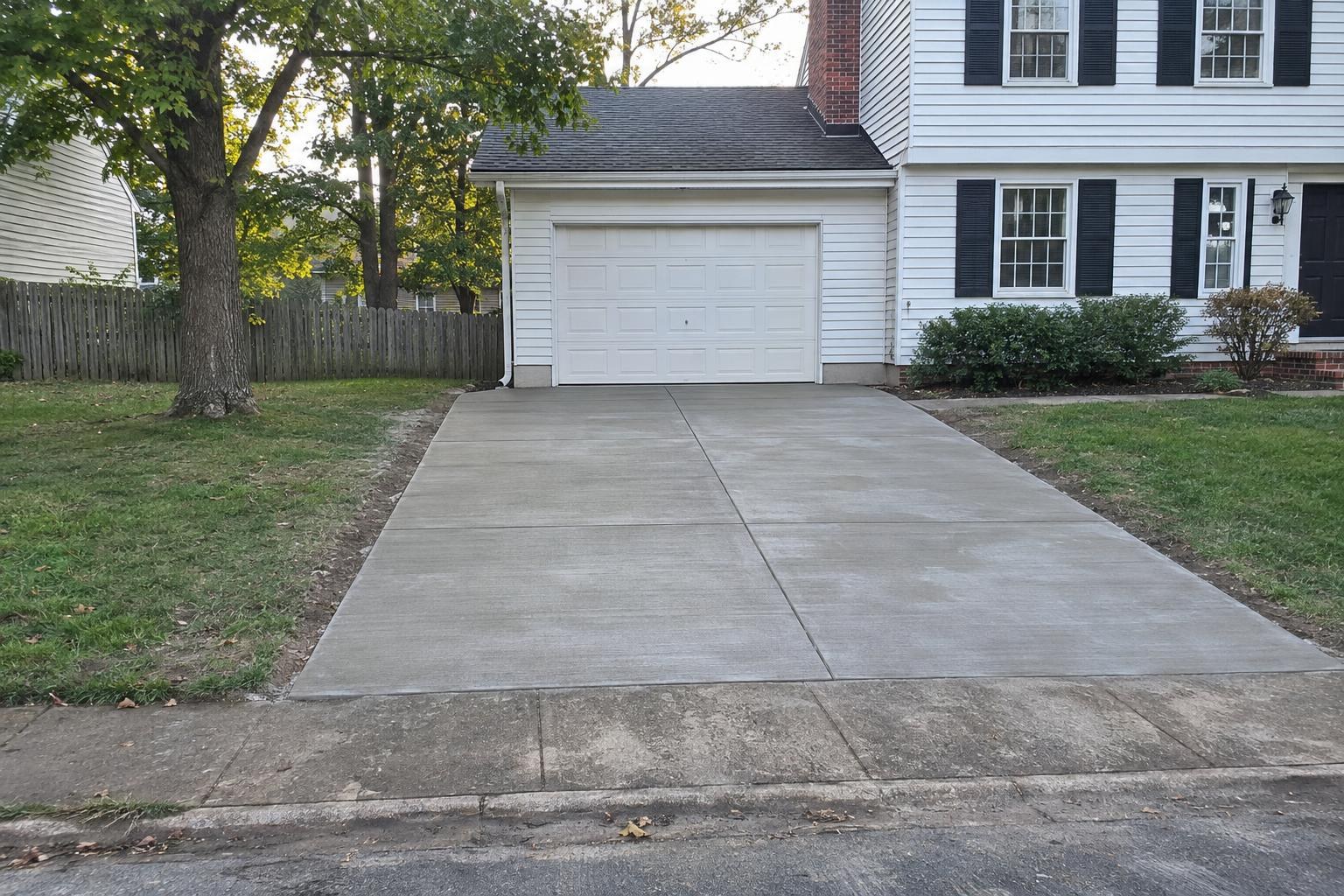
We excavate, grade, and compact a proper gravel base before any concrete goes down, usually 4 inches of slab over 4 inches of compacted stone. We reinforce with rebar or wire mesh depending on soil and vehicle load, and we saw-cut joints within 24 hours so the slab cracks where we tell it to.

Concrete Patios

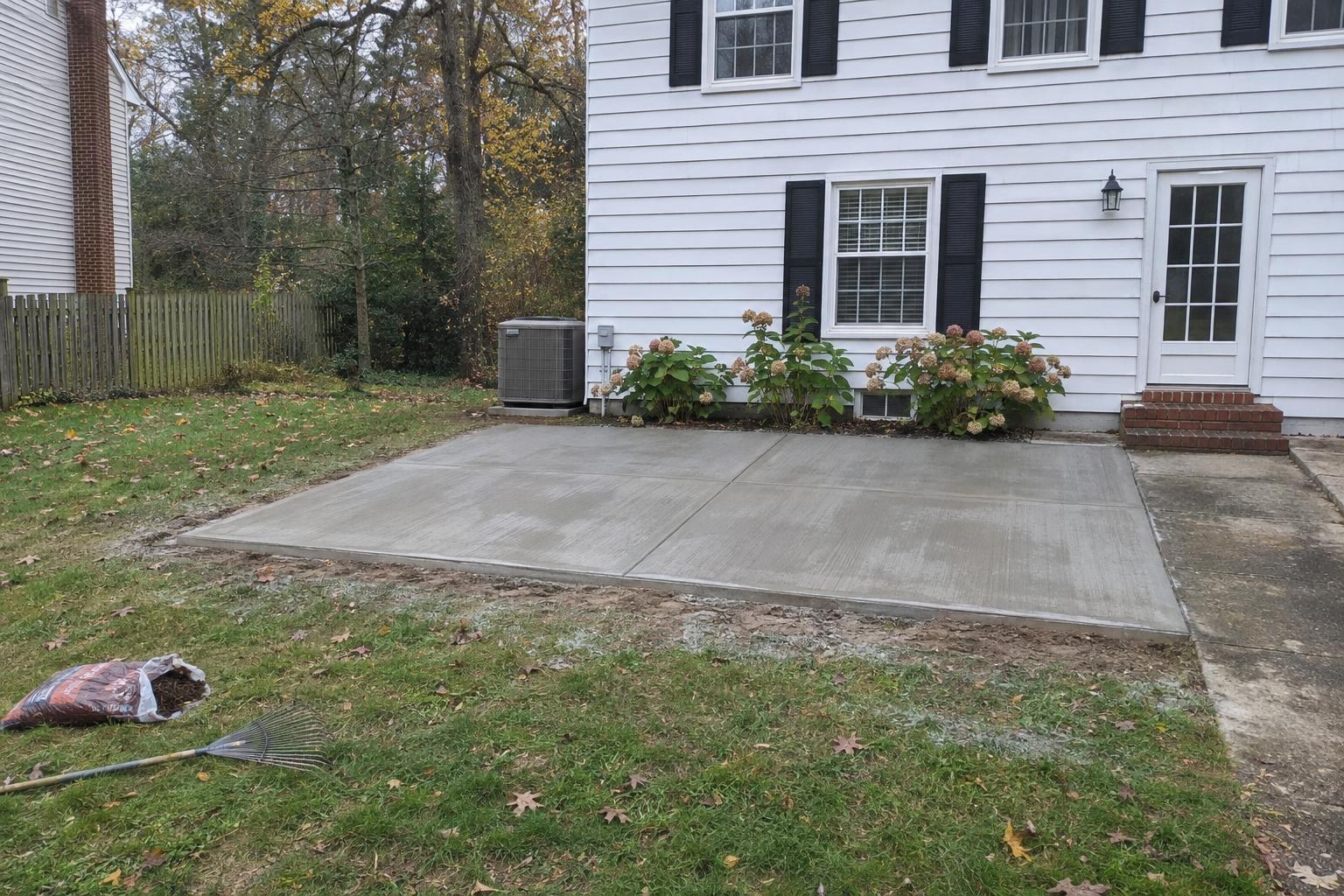
A patio gets sloped away from the house, roughly a quarter inch per foot, so water doesn't pool against your foundation. We can broom finish it for grip or go with a stamped or exposed aggregate look depending on what you want underfoot.

Stamped Concrete

Stamped concrete gives you the look of flagstone, slate, or brick for a fraction of the cost and none of the weeds coming up between joints. We color it while the concrete's still plastic, then seal it so the pattern and color hold up under weather and foot traffic.

Concrete Repair

We patch spalled steps, mudjack or replace heaved slabs, and fix trip hazards where a panel's settled lower than the one next to it. Sometimes the right fix is cutting out one bad section instead of tearing out an entire driveway.

Concrete Sidewalks

Sidewalks take a beating from freeze-thaw cycles and tree roots pushing up from underneath. We dig past any root intrusion and pour a slab thick enough to resist the heaving that cracks thinner walkways.

Concrete Steps

We build steps to code rise and run, typically 7 inch rise and 11 inch tread, so they don't throw off anyone's stride. Poured steps also get broom-finished treads so they're not slick when it rains or ices over.

Concrete Foundations

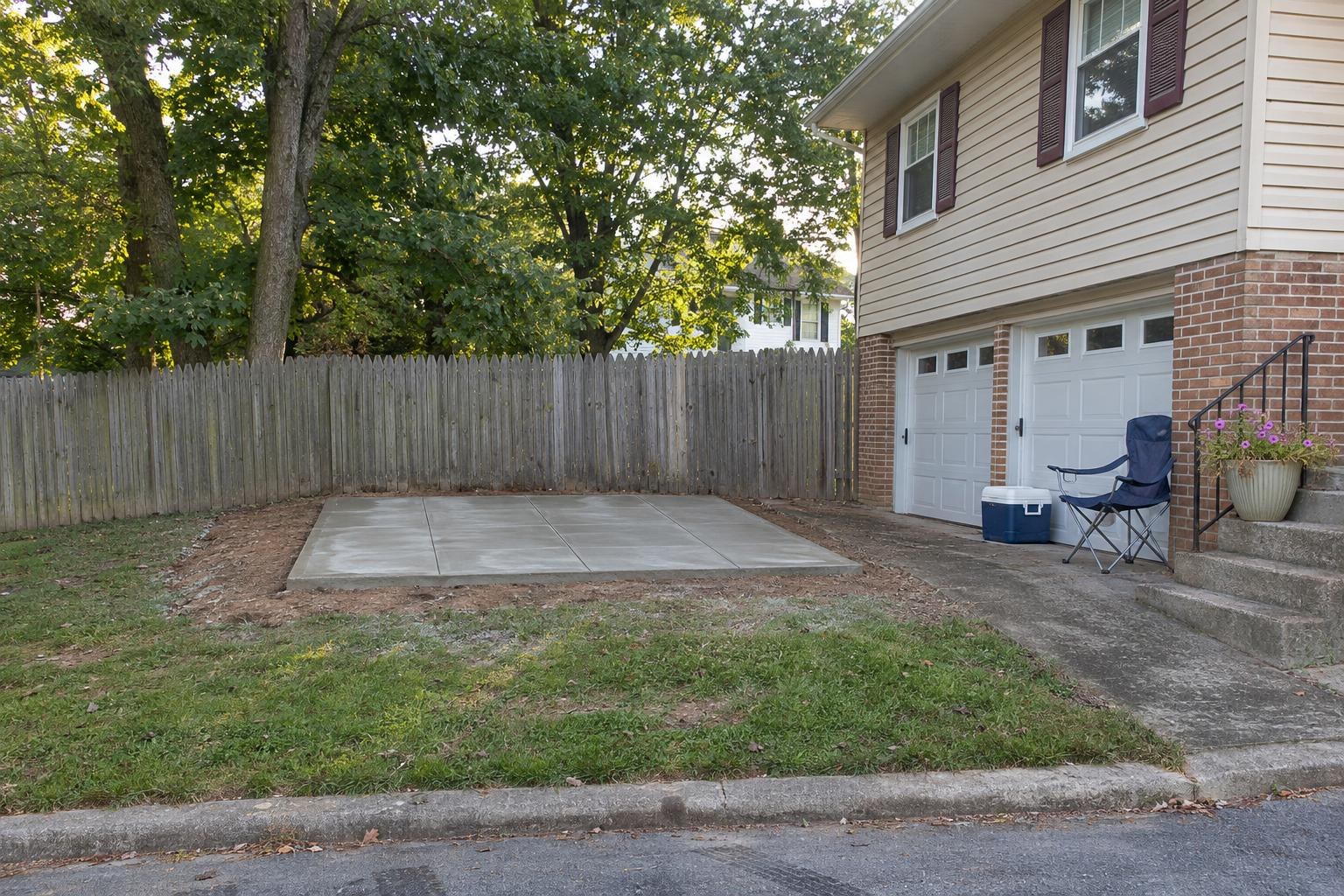
For additions, sheds, and garages we pour footings below the local frost line and tie reinforcement into the wall forms before the pour. Getting the footing depth wrong is how foundations crack and shift, so we don't guess on it.

Concrete Resurfacing

If your existing slab is sound but pitted, scaling, or just ugly, we can overlay it with a thin resurfacing product instead of a full tear-out. It's a fraction of the cost of replacement, though it won't fix a slab that's actually cracked through or settling.

Concrete Pool Decks

Pool decks need a non-slip finish and the right slope so water runs off into drains instead of back toward the coping. We use broom or textured finishes here, stamped concrete can get slippery when wet.

Garage Slab Replacement

A garage slab that's cracked or sinking at the overhead door is usually a drainage or base failure, not just old concrete. We tear it out, fix the grading, and pour a new slab reinforced for the weight of your vehicles.

How It Works

Four steps, and no surprises in any of them.

01

We come and look

You tell us what you want doing, we look at what is actually there, and we ask the awkward questions early.

02

You get a price

In writing, itemised, free. If something might add cost later we flag it now rather than at the end.

03

We do the work

Same crew throughout. We cover your floors, keep the dust down and tidy up before we leave each day.

04

We walk it with you

You point out anything you are not happy with and we fix it before the invoice, not after.

Where We Work

All of this, across Gaithersburg, MD

These are the towns where we regularly pour driveways, patios, and repair work.

Gaithersburg, MD
Rockville, MD
Germantown, MD
Frederick, MD
Silver Spring, MD
Bethesda, MD
Olney, MD
Potomac, MD
Damascus, MD
Clarksburg, MD
Darnestown, MD
North Potomac, MD
Common Questions

Things worth asking

Once a project's actually underway, these are the questions that come up.

Do I need a permit for a new concrete driveway or patio?
Permit requirements for concrete work vary by jurisdiction, but driveways connecting to a public street often require a permit while a standalone backyard patio may not. Checking with the local building department before work starts avoids delays or having to redo work that doesn't meet code.
How long does it take to pour and cure a concrete slab?
A typical driveway or patio pour takes one to two days for forming and finishing, but the concrete needs about 24 to 48 hours before it can be walked on and 5 to 7 days before vehicles drive on it. Full strength curing takes closer to 28 days, which matters for anything heavy parked or stored on the new slab early.
Can concrete work be done on a tight budget?
Concrete costs can be reduced by choosing a broom finish instead of stamped or colored concrete, sticking to standard thickness where load allows, and phasing a large project into sections poured over time. Being upfront about budget during the quoting stage lets a contractor suggest where to cut cost without compromising the slab's structural integrity.
Do you guarantee your concrete work?
Reputable concrete contractors typically warranty workmanship for a period of one to a few years, covering issues like improper curing or installation defects, though not normal weathering or minor surface cracking. Concrete inherently develops some hairline cracking over time, which is different from structural failure and usually isn't covered under a workmanship warranty.
Will I deal with the same person throughout the concrete project?
On most residential concrete jobs, a single crew lead or project contact handles communication from the initial quote through the final finish, rather than the homeowner coordinating with multiple people. This single point of contact is usually the person to call with questions during the pour or curing period.
What type of concrete mix and reinforcement do you use?
Residential concrete work typically uses a 3,500 to 4,000 PSI mix, with rebar used for driveways and heavier load areas and wire mesh sometimes used for lighter-duty patios or walkways. The choice between rebar and mesh depends on soil conditions, expected weight loads, and local climate factors like freeze-thaw cycles.
Can I still use my driveway or patio while work is happening?
A driveway or patio under construction is typically unusable for vehicle or foot traffic from the day forms go in until the concrete cures enough to bear weight, roughly 24 to 48 hours minimum. Homeowners with only one driveway often need to arrange alternate parking during this window.
What should I do to prepare my property before concrete work starts?
Preparing for concrete work means clearing the work area of furniture, vehicles, and landscaping, and marking any shallow irrigation lines, sprinkler heads, or buried cables the crew should know about. Contractors typically call for utility locates before excavation, but homeowners should flag anything not covered by a standard utility marking.
What happens if you find a problem once digging starts?
Common mid-project surprises in concrete work include unexpectedly soft or wet subgrade soil, old buried debris, tree roots, or a utility line not caught by initial locates. These usually require additional excavation or base material, which can add cost and time but is necessary to avoid a slab that settles or cracks prematurely.
How do I take care of new concrete after it's poured?
New concrete should be kept free of de-icing salts for at least the first winter, since salt accelerates surface scaling, and heavy vehicles should be kept off driveways for the first week of curing. Sealing concrete every 2 to 3 years helps resist staining, moisture penetration, and surface wear from weather and traffic.

Not sure what you need?

Describe the problem and we will tell you what it probably is. No obligation.
Call (301) 234-7665